

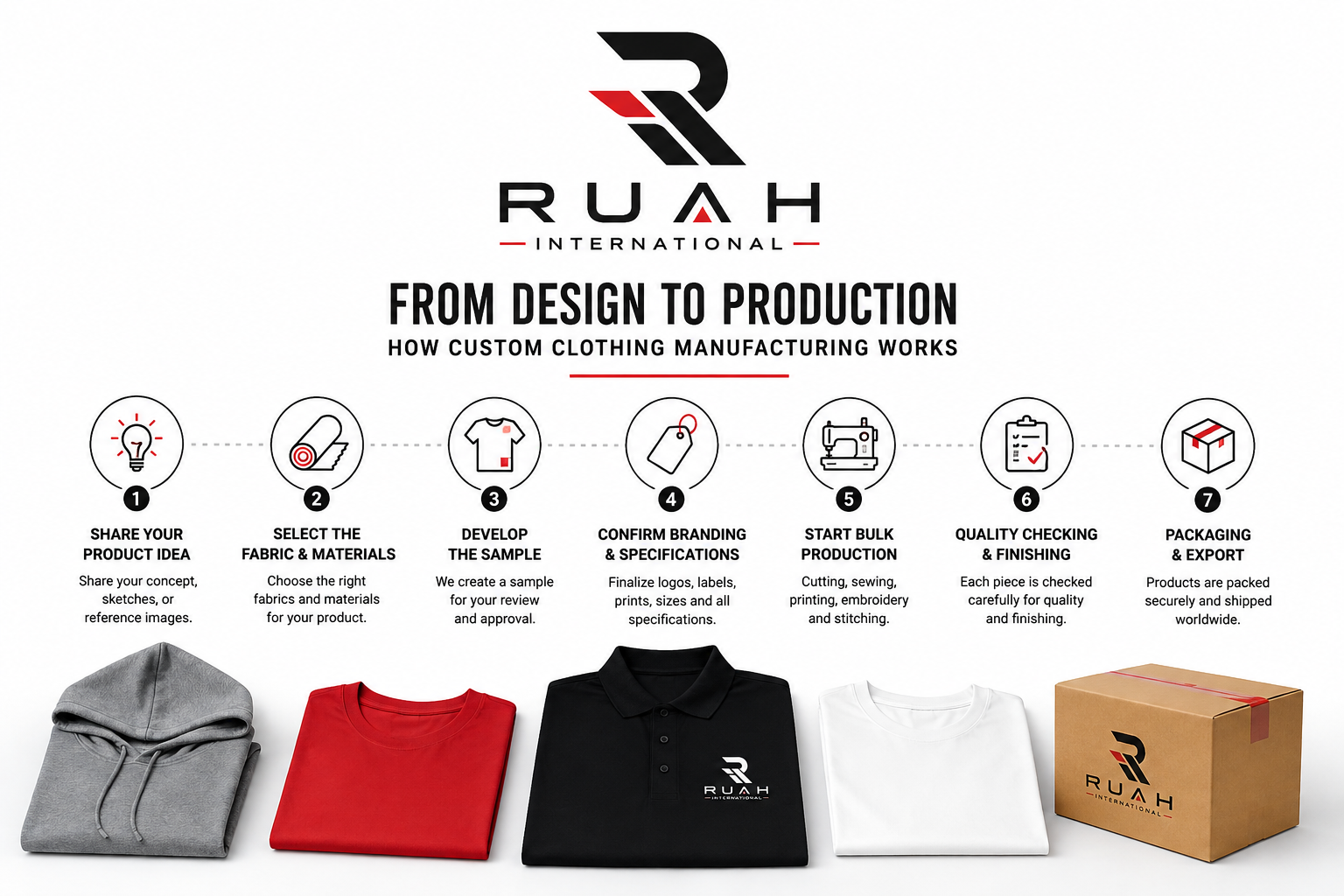
Turning a clothing idea into a finished product involves several important stages. Whether you are launching a new fashion brand, creating teamwear, or developing a private-label collection, understanding the custom clothing manufacturing process can help you work more effectively with your manufacturer.
1. Share Your Product Idea
The manufacturing process begins with your product concept. You can provide sketches, reference images, existing samples, technical specifications, or simply explain the product you want to develop.
The more details you provide, the easier it becomes for the manufacturer to understand your requirements.
2. Select the Fabric and Materials
Material selection is one of the most important decisions in apparel manufacturing.
Depending on the product, you may choose from materials such as:
- Polyester
- Cotton
- Mesh
- Interlock
- Dry-fit fabrics
- Spandex blends
- Fleece
- French Terry
- Leather and other specialty materials
Fabric choice should match the product’s intended use, appearance, comfort, and durability requirements.
3. Develop the Sample
Before starting bulk production, a sample can be developed to evaluate the product.
The sample stage allows brands to check details such as fit, measurements, fabric, stitching, colors, printing, embroidery, and overall appearance.
Any required changes can be discussed before moving into larger-scale production.
4. Confirm Branding and Specifications
Custom clothing is not only about the garment itself. Branding details are also important.
Depending on the product, customization may include logos, labels, prints, embroidery, colors, packaging, and other brand-specific details.
Clear specifications help reduce misunderstandings during production.
5. Start Bulk Production
Once the design, materials, sizing, and specifications are approved, the manufacturer can begin production.
During this stage, cutting, sewing, printing, embroidery, finishing, and other processes are completed according to the approved specifications.
6. Quality Checking and Finishing
Quality control is an important part of professional apparel manufacturing. Finished garments can be checked for stitching, measurements, fabric issues, printing, embroidery, finishing, and overall appearance.
The goal is to ensure that the final products meet the agreed specifications.
7. Packaging and Export
After production and final inspection, products can be packed according to the customer’s requirements and prepared for shipment.
For international customers, reliable communication and proper export coordination are essential parts of the manufacturing process.
Work With Ruah International
Ruah International is a Pakistan-based manufacturer and exporter of streetwear, leather wear, casual wear, and sportswear.
We work with brands, retailers, wholesalers, and businesses worldwide to transform product concepts into finished apparel through customized manufacturing solutions.
From the first idea to production, our focus remains on quality, craftsmanship, modern design, comfort, and durability.
Ready to develop your next clothing product? Contact Ruah International and let’s bring your idea to life.